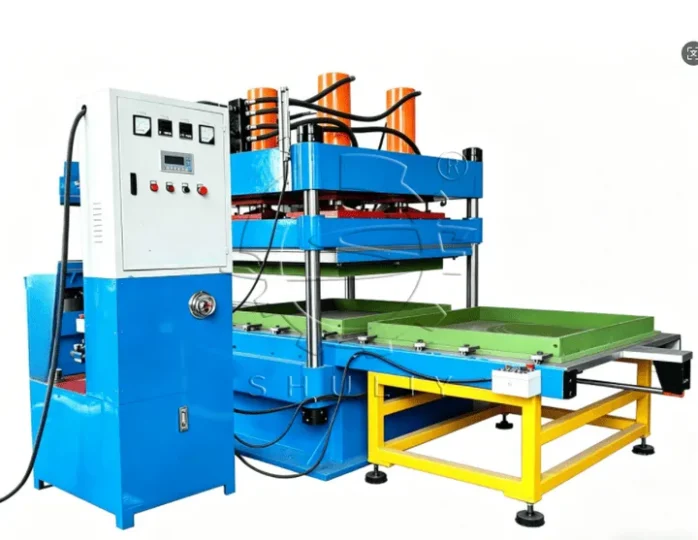
The rubber tile making machine is designed to manufacture rubber flooring tiles from rubber granules, binders, and pigments through a process of heating, pressing, and curing. For manufacturers who want to produce finished flooring products from recycled rubber, this machine provides a practical way to turn processed rubber materials into tiles for different applications.
Whether you plan to manufacture rubber mats for gyms, flooring for playgrounds, or rubber pavers for outdoor areas, choosing the right forming equipment is an important step. Our rubber tile vulcanizing press combines hydraulic pressure, electric heating, and a temperature and time control system to support consistent tile production.
How Does a Rubber Tile Making Machine Work?
Rubber tile production involves more than simply compressing rubber granules. The material must be mixed properly, distributed evenly in the mold, and cured under suitable processing conditions to obtain the required shape and thickness.
The typical production process includes the following steps.
1. Mixing the raw materials
Rubber granules, binder, and pigments are added to a mixer according to the product formulation. The materials are mixed thoroughly to distribute the binder and color evenly. Multiple mixing buckets can be used when different colors or formulations are required.
2. Preparing the mold
The mixed material is weighed according to the required tile specifications. For two-layer tiles, finer colored rubber granules can be used for the surface, while coarser black rubber granules form the base layer.
3. Filling and leveling
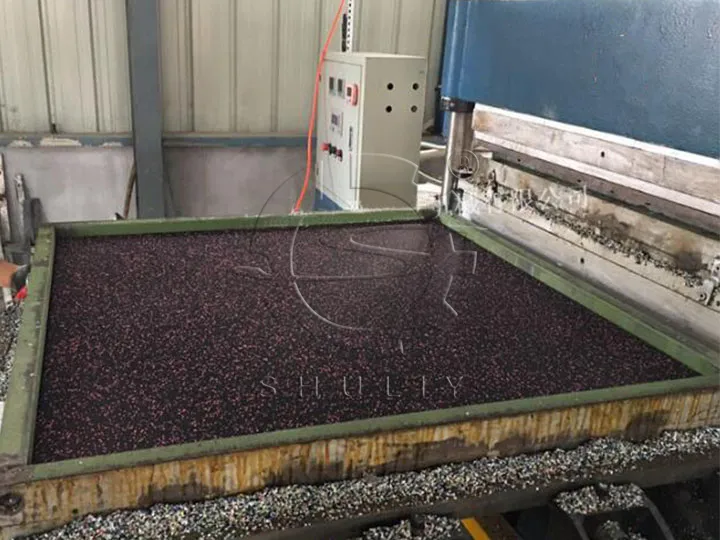
The prepared material is placed into the mold and leveled to ensure even distribution. The quantity of material used depends on the dimensions, thickness, and design of the finished tile.
4. Heating and vulcanization
The filled mold is placed in the rubber tile making machine. The hydraulic system applies pressure while the heating plates provide heat for forming and curing. The processing time depends on the material formulation, tile thickness, and operating conditions.
5. Demolding and inspection
After curing, the finished tile is removed from the mold and allowed to cool. Operators then check its dimensions, color consistency, and surface condition before the product is packed or transferred to the next stage.

What Are the Main Features of the Rubber Tile Making Machine?
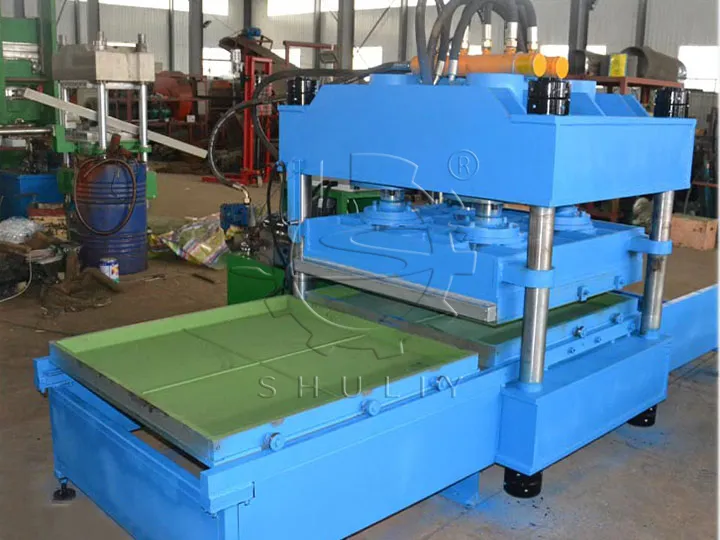
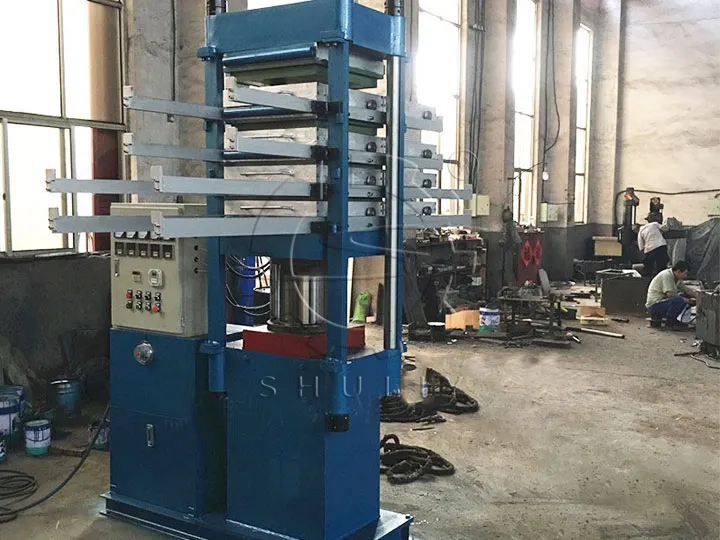
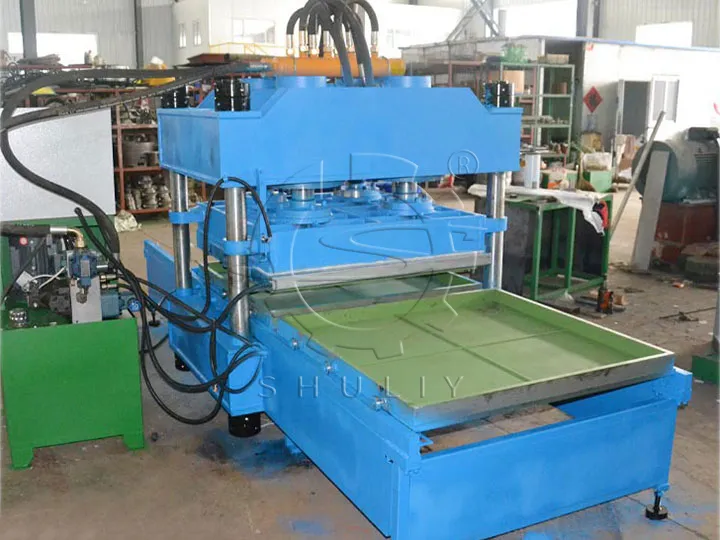
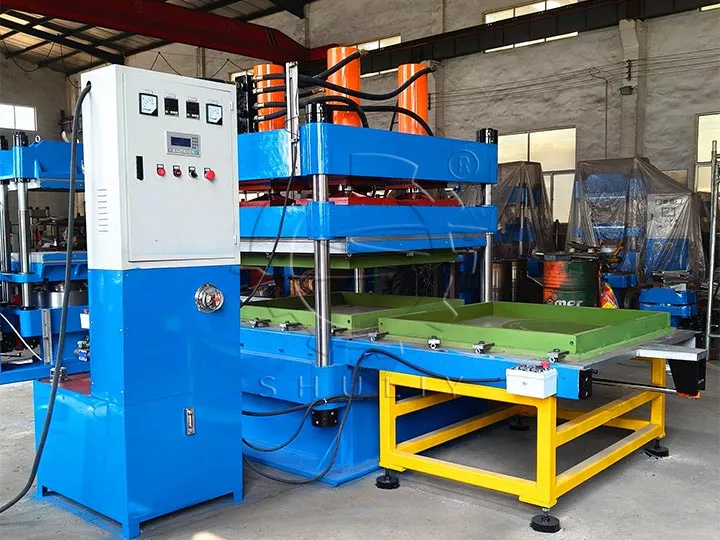
The machine integrates the main frame, hydraulic system, heating units, and electrical control system. It is designed for pressing and vulcanizing rubber tiles.
Key features include:
- Automatic temperature and time control: Makes it easier to set and manage production parameters.
- Hydraulic pressing: Provides the pressure required to form rubber materials.
- Easy operation: Operators can learn the basic procedures through simple training.
- Integrated structure: Simplifies installation and routine maintenance.
- Push-pull mold design: Makes it easier to move the mold in and out of the working area, reducing manual effort.
Adjustable Rubber Tile Molds for Different Thicknesses
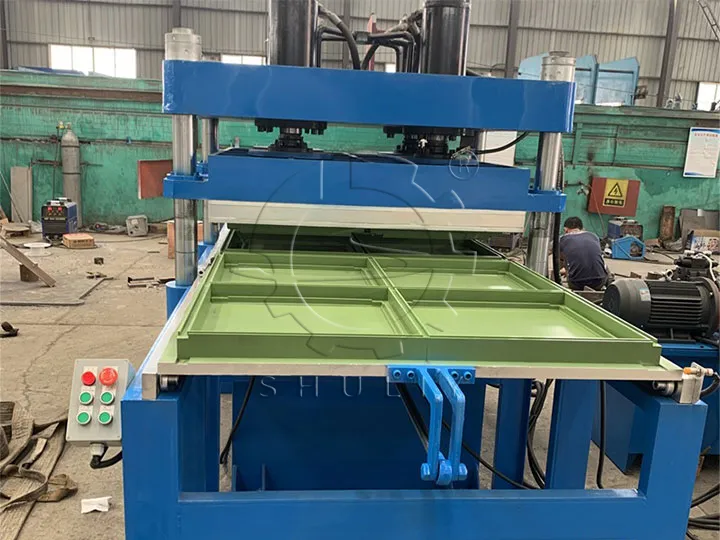
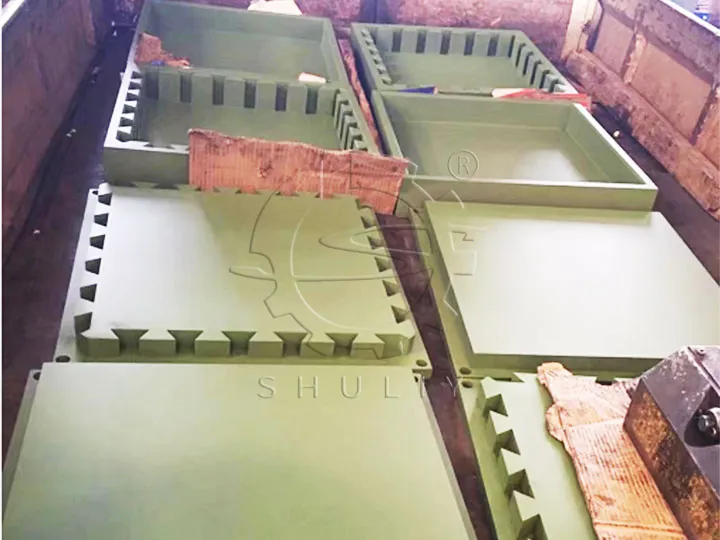
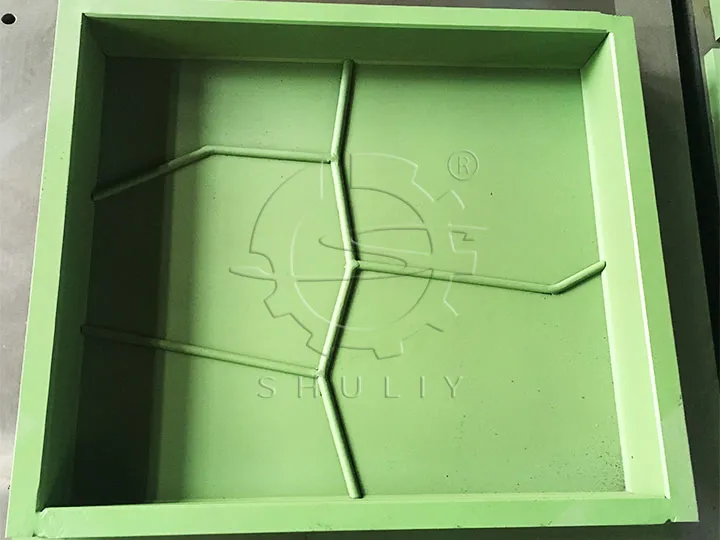
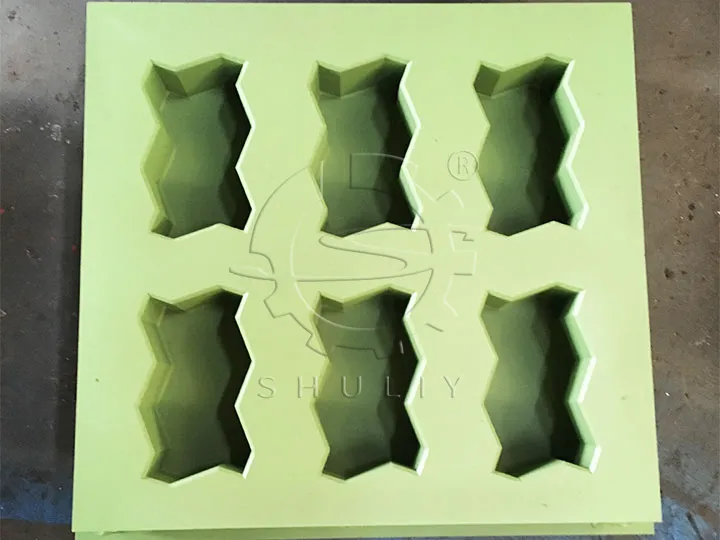
The mold is an important part of the production system because it determines the shape, dimensions, and thickness of the finished tiles.
Our rubber tile mold is equipped with adjustable tooling, allowing production of four tile thicknesses:
- 15 mm
- 20 mm
- 25 mm
- 30 mm
This arrangement gives manufacturers more flexibility when serving customers with different flooring requirements. Instead of preparing a completely separate mold for every supported thickness, the adjustable tooling allows the same mold to accommodate these four options.
The mold surface features a Teflon plating process. This non-stick surface helps rubber tiles release more easily after forming. Under normal operating conditions, the mold does not need to be sprayed with release agent before every loading cycle, helping reduce consumable costs and simplify daily production.
The mold also uses a push-pull guide rail structure, making it more convenient to move the mold into and out of the working area.
What Shapes of Rubber Tiles Can Be Produced?
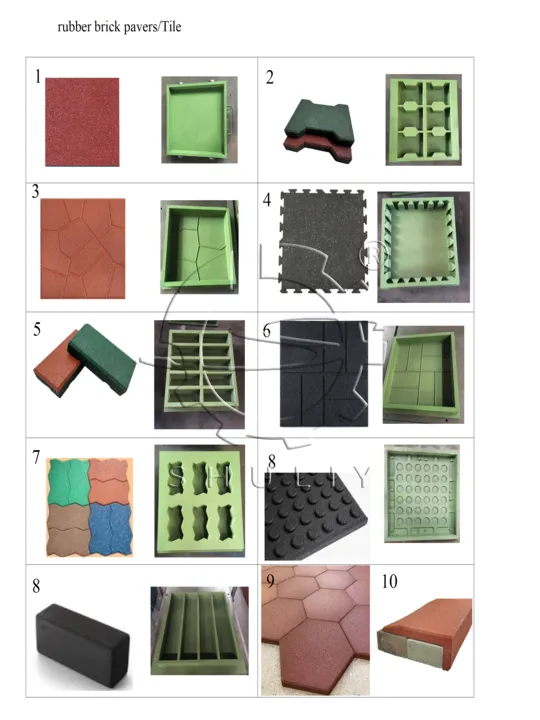
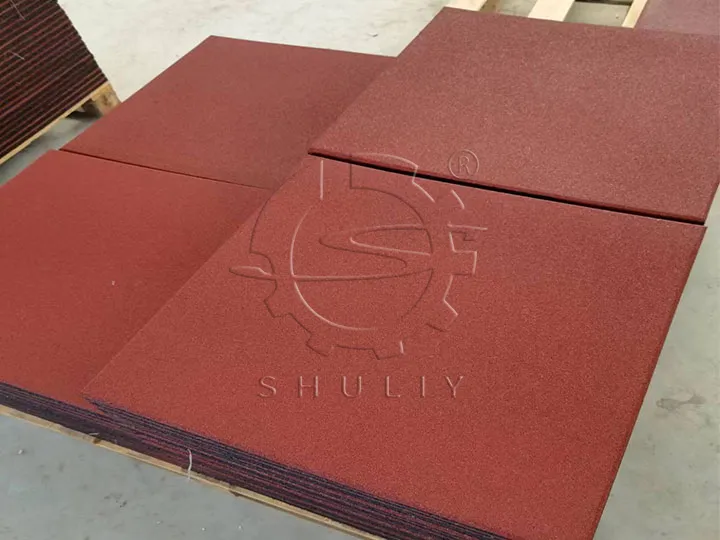
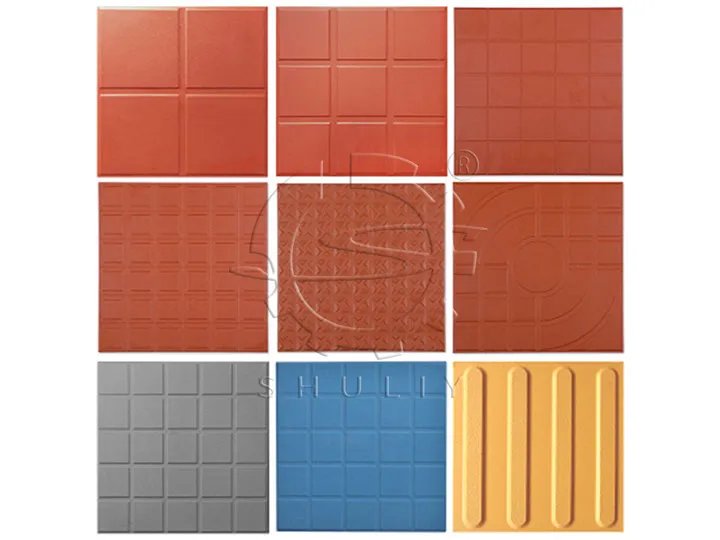
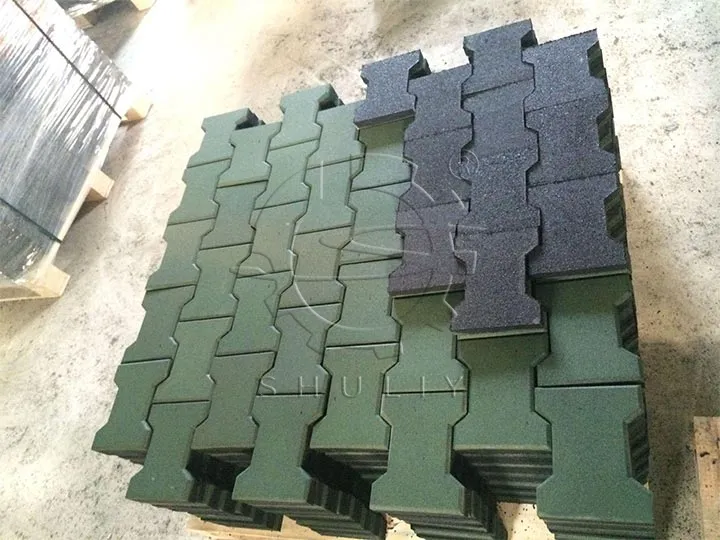
The available tile shapes depend on the mold design and the machine’s working dimensions. Common options include:
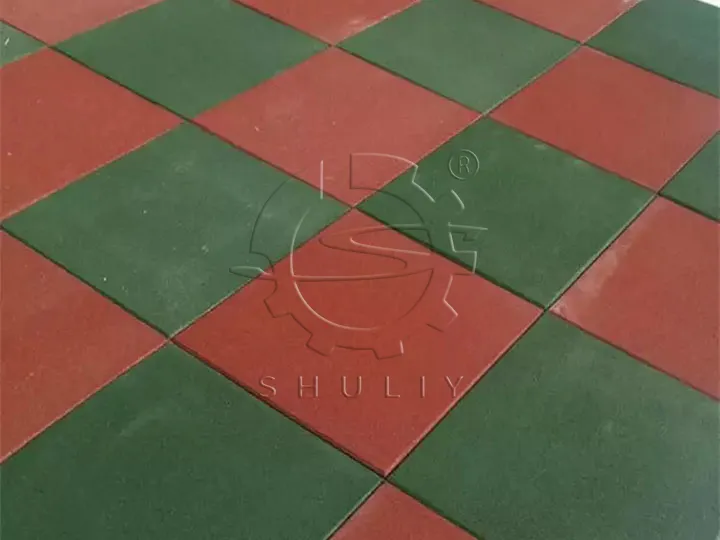
- Square rubber tiles
- Rectangular rubber tiles
- Rubber paving blocks
- Interlocking rubber floor tiles
- Custom-shaped tiles made with suitable molds
Standard machine configurations can accommodate tile sizes such as 500 × 500 mm, while some models also support 1000 × 1000 mm tiles. Other shapes, dimensions, or surface patterns should be confirmed according to the required mold design and rubber tile making machine specifications.
If you already have a target product in mind, sharing a sample, drawing, or tile dimensions helps us evaluate the appropriate mold and press configuration.
Rubber Tile Making Machine Models and Specifications
Different production requirements call for different heating plate dimensions, pressing capacities, and mold arrangements. The following models provide a reference for selecting equipment.
| Specification | D550 × 550 | D1100 × 1100 |
| Total pressure | 50 tons | 120 tons |
| Heating plate size | 550 × 550 × 45 mm | 1100 × 1100 × 50 mm |
| Number of layers | 4 | 1-2 |
| Motor power | 3 kW | 4 kW |
| Reference tile size | 500 × 500 mm | 500 × 500 mm or 1000 × 1000 mm |
The appropriate model depends on the required tile size, mold arrangement, output target, and available workshop space. Please confirm the final configuration with us before purchasing, especially if you require customized molds or a particular production capacity.
Combine a Rubber Powder Machine with Your Tile Production Line
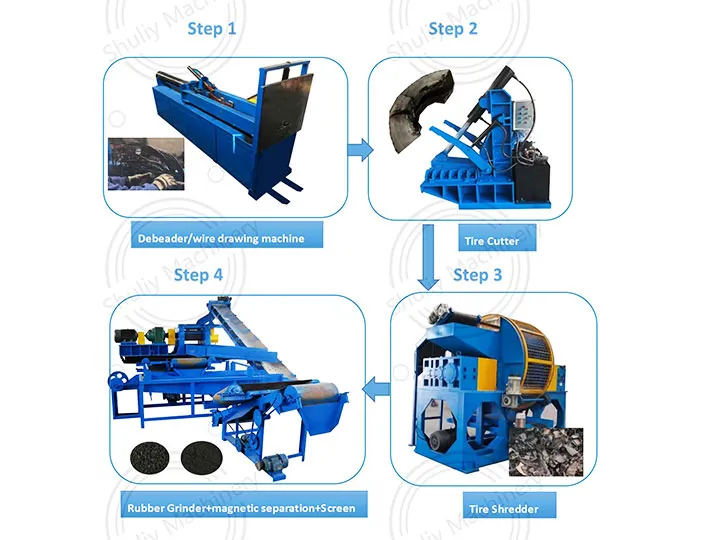
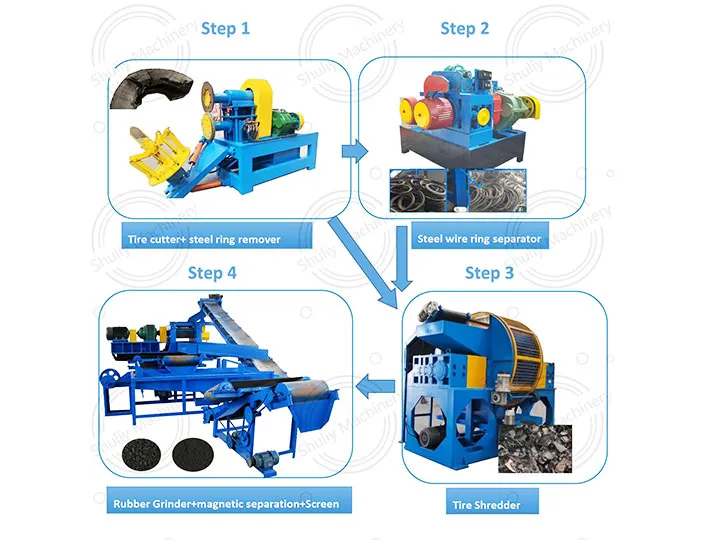
If you already process waste tires, you can consider combining a rubber powder machine with a rubber tile making machine.
The two machines perform different functions:
- Rubber Powder Machine: Processes waste tires into rubber granules or powder and separates the material into the required particle sizes.
- Rubber Tile Making Machine: Combines suitable rubber granules with binder and then presses the mixture into finished tiles.
The overall process can be summarized as follows:
Waste tires → Pre-treatment → Crushing and grinding → Rubber granule screening → Mixing with binder and pigments → Pressing and vulcanization → Finished rubber tiles
For businesses that already operate a rubber powder production line, this combination provides an opportunity to process rubber materials further and expand into finished products rather than selling only rubber granules.
If you are starting a new project, we can also help you plan the upstream rubber processing equipment and downstream tile-forming equipment according to your raw materials, target output, and finished product requirements.
Applications of Finished Rubber Tiles
Rubber tiles produced by this equipment can be used in various flooring projects, depending on their formulation, thickness, and performance requirements.
Typical applications include:
- Gym flooring: Rubber tiles for exercise areas and fitness facilities.
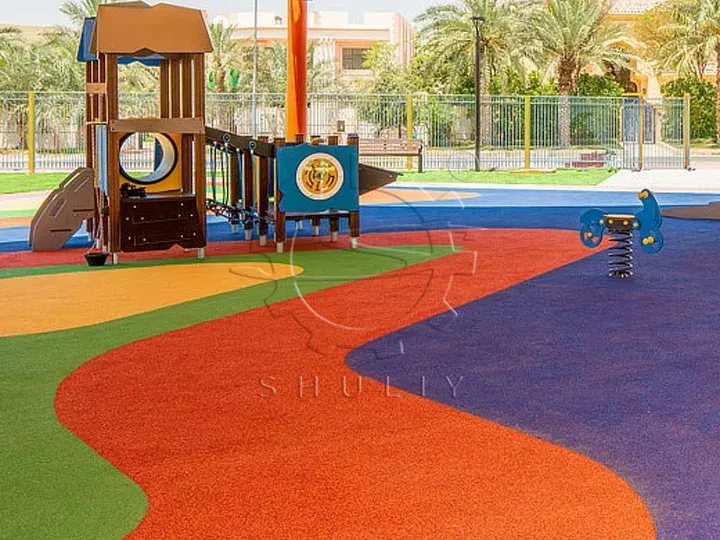
- Playground surfaces: Tiles used in children’s activity areas, subject to the required impact-absorption standards.
- Outdoor walkways: Rubber paving products for selected pedestrian areas.
- Commercial and recreational spaces: Rubber flooring for locations requiring a resilient surface.
- Agricultural facilities: Rubber mats for suitable livestock and working areas.
The final product’s slip resistance, durability, weather resistance, and impact performance depend on the rubber formulation, binder, manufacturing process, and installation conditions.
Find the Right Rubber Tile Making Solution for Your Project
Selecting a rubber tile making Machine starts with understanding what you intend to produce. Tile dimensions, thickness, shape, raw material particle size, and expected production volume all influence the equipment configuration.
If you already have rubber granules from a recycling line, we can help evaluate a suitable tile-forming press and mold arrangement. If you are starting with waste tires, we can also discuss a combination of rubber processing and tile-making equipment.
Contact us with your target tile size, required thickness, product photos, and estimated output. Our team can help you assess the suitable machine model, mold options, and production-line configuration for your rubber flooring business.