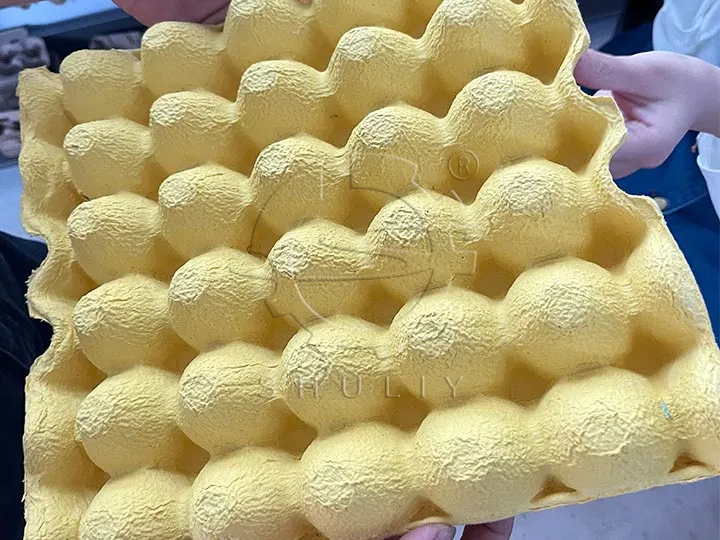
In an egg carton production line, the drying stage is often underestimated, yet it plays a crucial role in determining both the efficiency of the line and the quality of the final product. Many of our customers ask: “Which drying method should I choose?”
Based on our experience, this article briefly introduces the three most common egg tray drying systems: natural drying, brick kiln drying, and metal drying line. We hope this overview will help you make an informed decision based on your needs.
Natural Drying
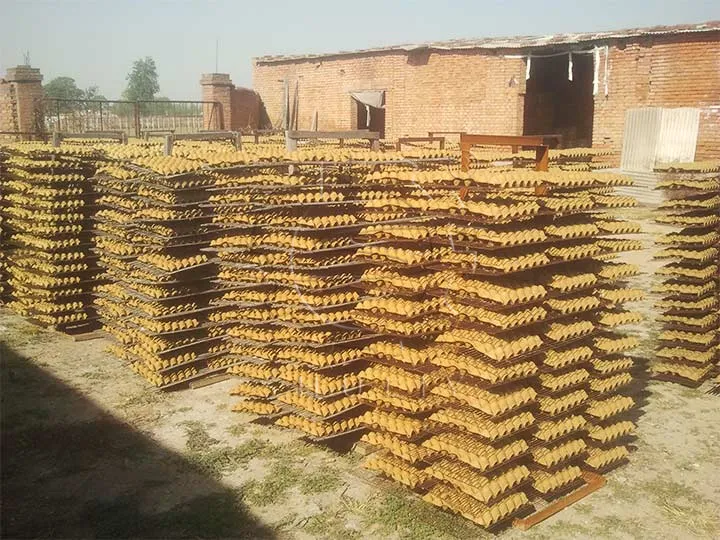
Natural drying is the most basic method. It simply requires an open space where trays can be dried under sunlight and natural airflow. Some of our customers in Southeast Asia and South America use this method effectively due to their warm and dry climates.
Suitable Conditions:
- Regions with strong sunlight and low humidity
- Small-scale production lines
- Limited startup budget or trial production
Advantages:
- Nearly zero energy consumption
- Very low initial investment
Things to Consider:
- Highly dependent on weather conditions
- Requires large open space (preferably paved)
- Labor-intensive handling and turning of trays

Brick Kiln Drying
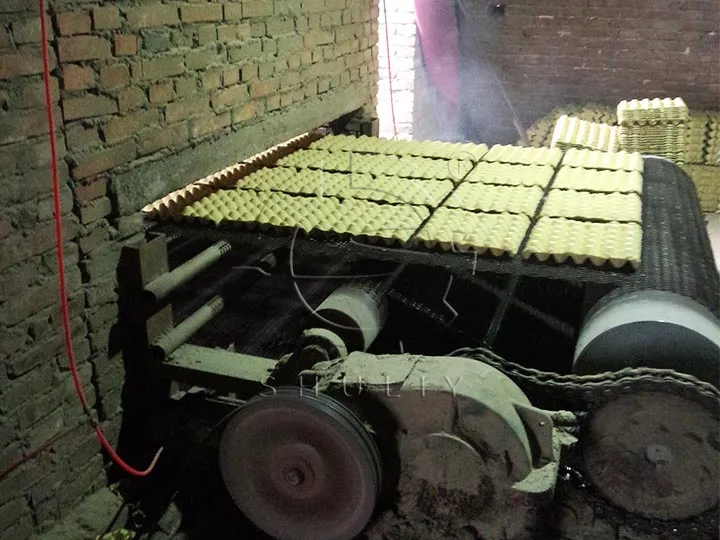
Brick kiln drying is a semi-automatic method. Wet trays are placed on racks or trolleys and moved into a brick chamber heated by coal, firewood, or biomass. We often recommend this egg tray drying system to clients looking for a stable yet affordable drying solution.
Suitable Conditions:
- Medium-scale production
- Facility space available for kiln construction
- Stable fuel supply (e.g., wood or coal)
Advantages:
- Shorter drying time than natural drying
- Less weather-dependent, usable year-round
- Moderate energy consumption
Things to Consider:
- Requires regular maintenance and ash cleaning
- Initial kiln construction involves civil work
Metal Drying Line
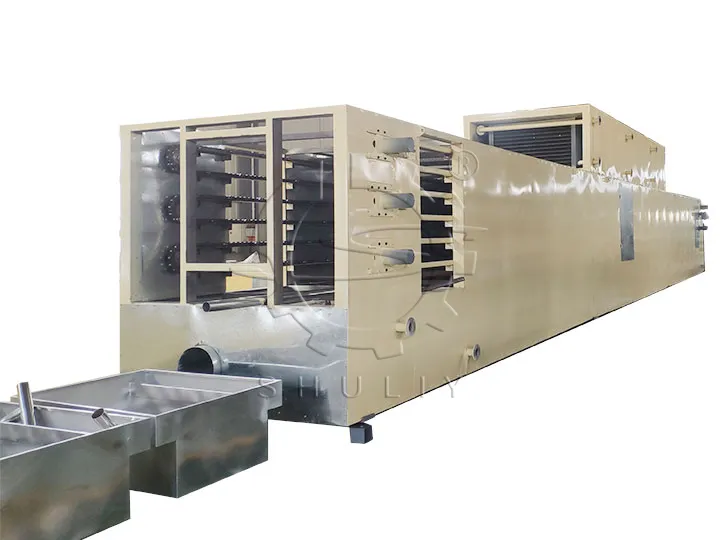
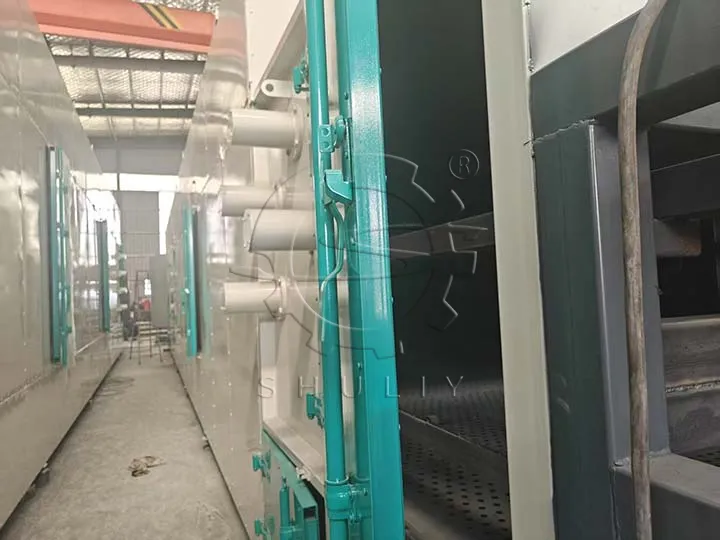
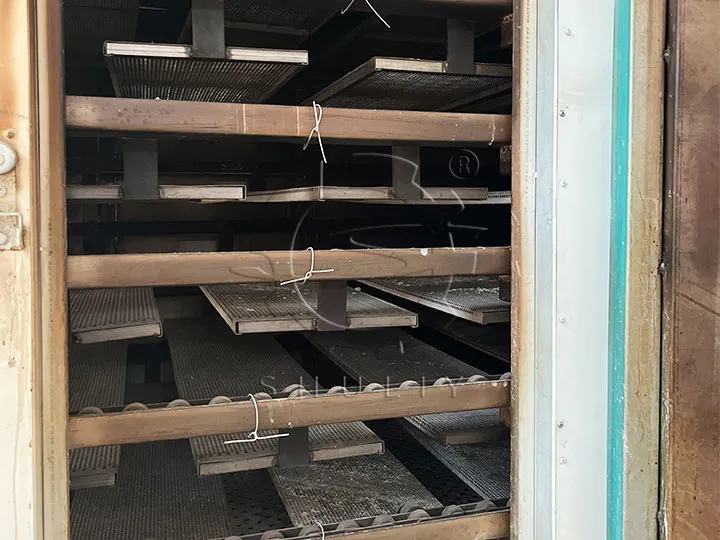
If you’re aiming for a modern, standardized production process, we usually suggest using a fully automatic metal drying line. This egg tray drying system features stainless steel construction, multi-layer conveyor belts, and controlled heating using gas, electricity, or biomass.
We’ve implemented this solution for several large projects. For example, one customer producing over 30,000 trays per day operates two metal drying lines with stable and consistent results, regardless of weather.
Suitable Conditions:
- Medium to large-scale production
- High demand for drying consistency
- Reliable power or gas supply
Advantages:
- Fast drying (around 20–30 minutes per batch)
- Automated temperature and humidity control
- Reduces labor and simplifies management
Things to Consider:
- Higher initial investment
- Requires planning for factory layout
Contact Us for Customized Solutions
Each drying method has its own strengths and trade-offs. When working with our clients, we always consider local climate, energy sources, site conditions, and target capacity before recommending a suitable egg tray drying system.
If you’re planning to start an egg tray production line or want to optimize your existing drying process, feel free to reach out. We’re happy to offer tailored advice and equipment recommendations to help you achieve stable, efficient production.