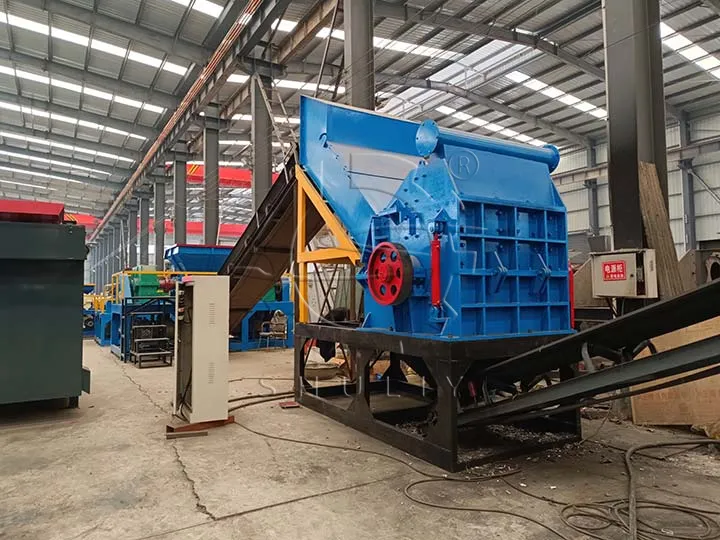
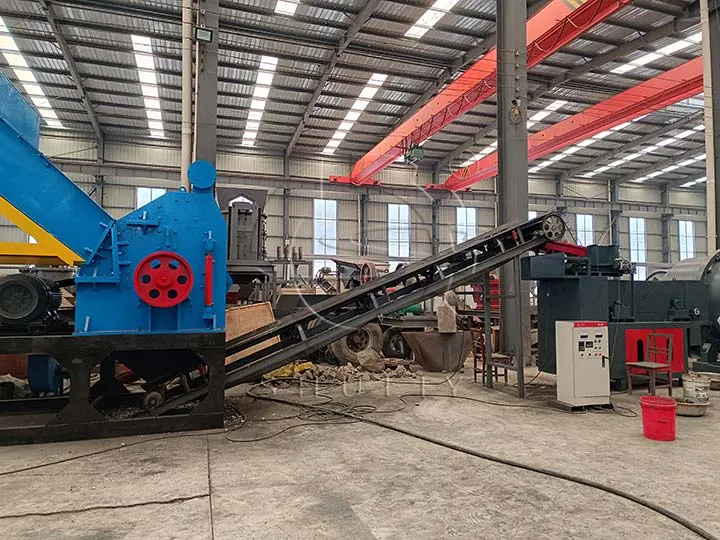
Thermal break aluminum recycling line is designed for the recycling and separation of thermal break aluminum profiles, mainly focusing on crushing and sorting processes. This recycling line is suitable for aluminum profiles containing plastic insulation strips and other non-metal materials, aiming to improve aluminum recovery efficiency and material purity through mechanical processing and physical separation.
The complete line mainly consists of a metal shredder, crusher, and eddy current separator, which work together to achieve size reduction and effective metal–non-metal separation.
How Do We Process Thermal Break Aluminum?
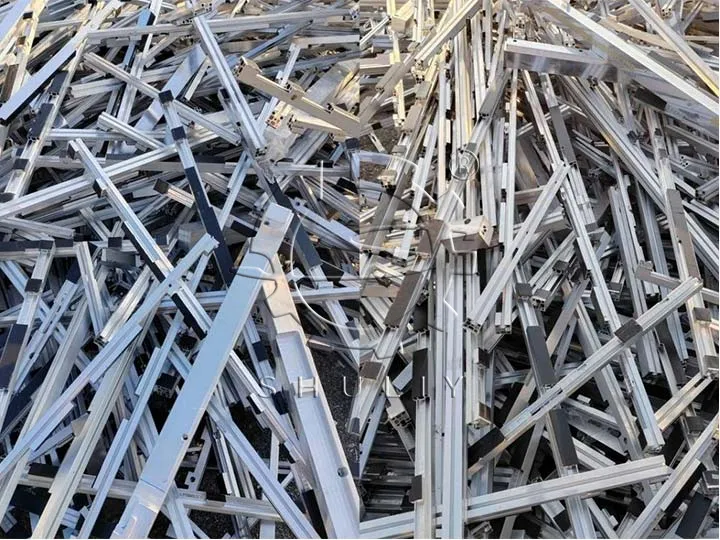
In real recycling operations, thermal break aluminum usually consists of aluminum profiles, plastic insulation strips, and a small amount of other impurities. Based on these material characteristics, we design the process around three key steps:
Shredding → Secondary Crushing → Eddy Current Separation
Each step is intended to achieve better liberation and higher recovery efficiency.
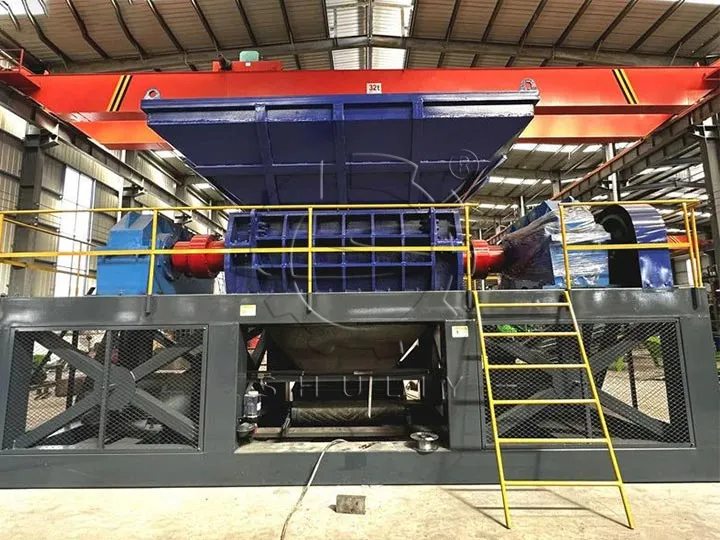
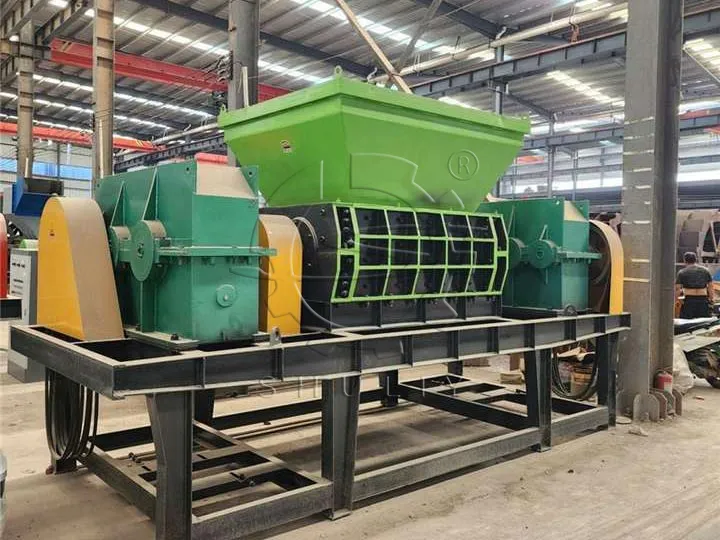
Step 1: Metal Shredder – Making Materials Easier to Separate
Thermal break aluminum scrap is first fed into the metal shredding machine.
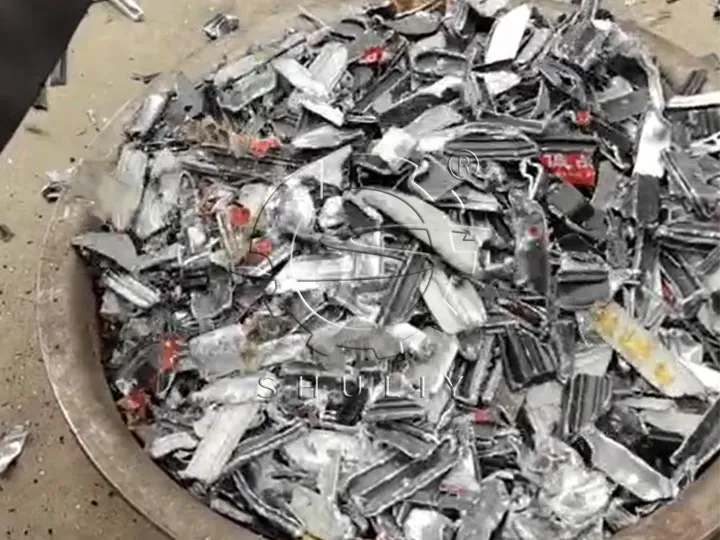
Through tearing and shearing, long or irregular aluminum profiles are reduced to smaller sizes.
The purpose of this step is clear: Reduce material size and release the bonding structure between aluminum and plastic insulation strips.
- Multiple models available to match different capacity requirements
- Capable of handling mixed and irregular materials
- Uniform discharge, preparing material for the next stage
If your material size or condition varies, we can recommend a suitable shredder model based on your actual situation.
Step 2: Scrap Metal Crusher – Further Liberation of Aluminum and Non-metal Materials
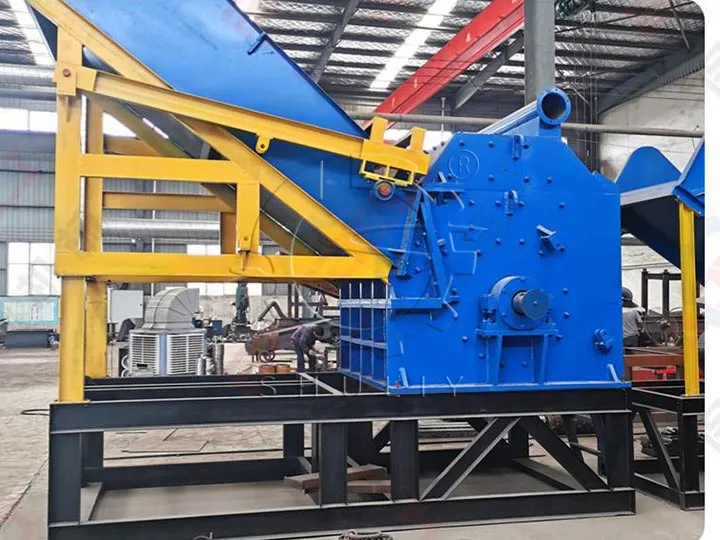
After shredding, the material enters the aluminum crusher for secondary crushing.
High-speed rotating hammers are used to further break the material.
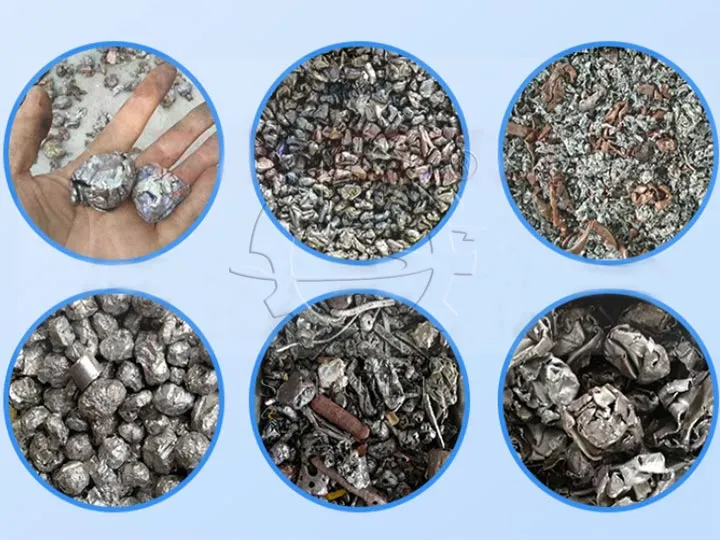
- Typical output size: 3–10 cm
- Discharge in small blocks or pellets
- Improves liberation between aluminum and plastic
- Designed for continuous operation
This stage plays an important role in improving the efficiency and accuracy of downstream separation.
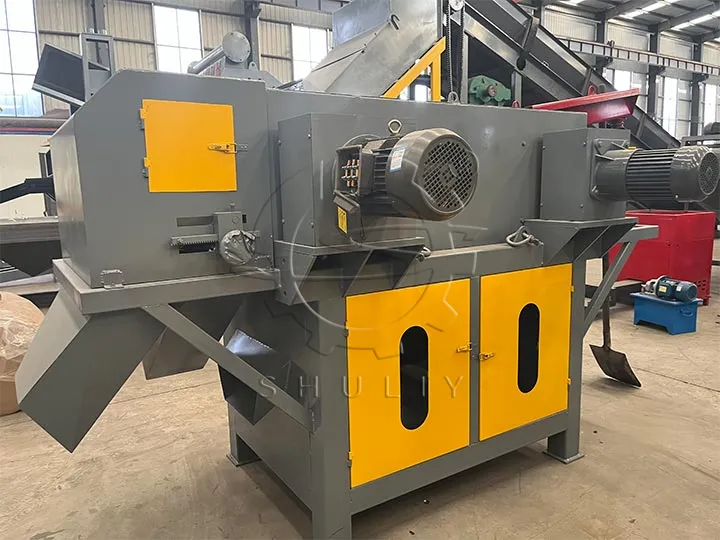
Step 3: Eddy Current Separator – Automatic Separation of Aluminum and Non-metals
During the separation stage, the material is processed by the eddy current separator, also known as a copper aluminum separator or non-ferrous metal eddy current separator.
This is one of the key machines in the thermal break aluminum recycling line, designed for automatic separation of non-magnetic metals.
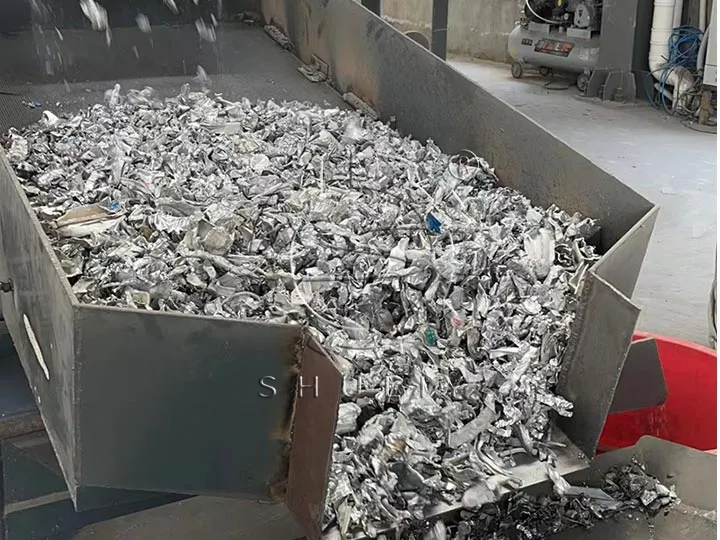
- Excellent separation performance for aluminum and other non-ferrous metals
- Effectively separates aluminum from plastic insulation strips and other non-metal materials
- Automatic and stable operation
- Helps improve aluminum recovery rate and product purity
If your priority is stable separation performance and clean aluminum output, this step is especially important.
Optional: Do You Need Higher-Quality Recovered Aluminum?
After separation, some customers choose to add a metal dry polishing machine for further surface treatment of the recovered metal.
This machine is mainly used for:
- Deburring
- Rust removal
- Edge rounding
- Surface finishing and polishing
It is particularly suitable for easily deformable workpieces. After dry polishing, parts can maintain their original shape and dimensional accuracy, while surface roughness can be improved by 1–2 grades.
The machine is suitable for medium to large-sized metal parts, providing an effective post-processing solution when higher surface quality is required.
How Can We Support Your Recycling Project?
Every thermal break aluminum recycling project is different in terms of material condition, capacity requirements, and recovery goals. For this reason, the thermal break aluminum recycling line is not a fixed configuration.
We can help you with:
- Equipment model selection
- Line configuration based on your target capacity
- Process recommendations tailored to your material
- Optional post-processing solutions
If you are planning a thermal break aluminum recycling project or would like to learn more about equipment selection and pricing, feel free to contact us.
Simply tell us your material condition and expected capacity, and we will provide you with a suitable solution and detailed information.